Our regions span tropical, subtropical and temperate climates, from northern Queensland through to central and southern Queensland.
Our primary industries enjoy year-round production of a wide range of products and commodities and contribute significantly to the economy and liveability of our regional communities.
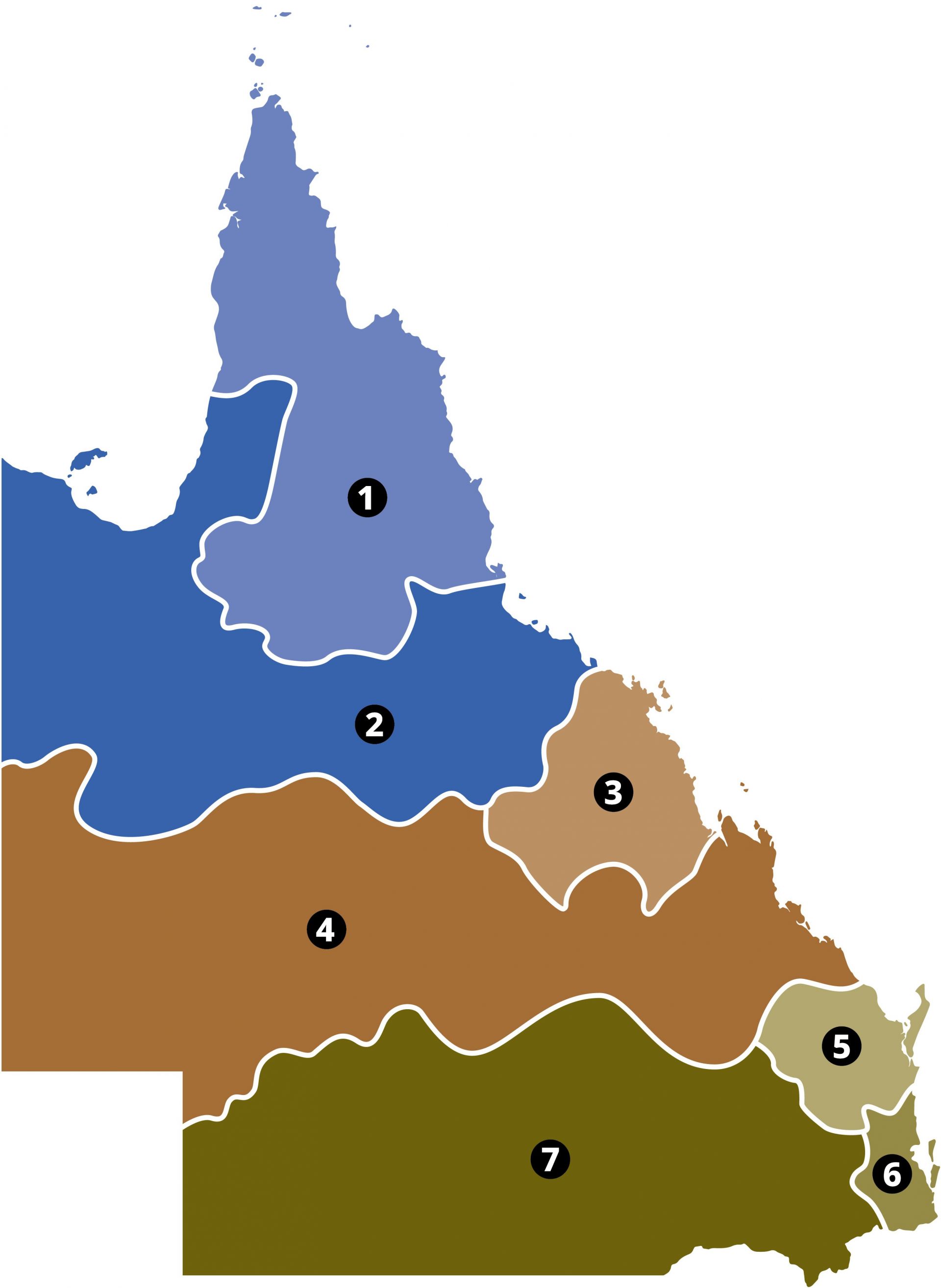
Northern Queensland
The northern region comprises:
It is characterised by tropical and dry-tropical landscapes and pristine waters.
From Cape York through to Townsville, it boasts highly productive fisheries, cropping and grazing, and contributes almost 25% of Queensland's gross value of production.
Central Queensland
The central region comprises:
It is renowned for its extensive grazing, cropping and intensive production systems.
It contributes almost 25% of Queensland's gross value of production and nearly 40% of beef output, 30% of sugarcane, and 10% of the state's horticulture production.
Southern Queensland
The southern region comprises:
It is home to the state's capital city, Brisbane.
The region contributes more than 50% of Queensland's gross value of production. It is known for its fresh produce, native and plantation forestry, cropping, grazing, horticulture and fisheries, in addition to significant beef, wheat and cotton production.
Last updated: 07 Aug 2026